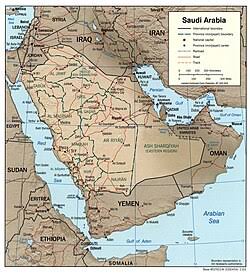
On the night of Sunday, February 28, the return of airstrikes over Beirut marked the beginning of new hostilities between Hezbollah and Israel. The bombings followed the resumption of rocket launches from southern Lebanon by Hezbollah, in the midst of the ongoing major war involving Iran on one side and the United States and Israel on the other: a confrontation that has engulfed the entire Middle East, including the Gulf region, reaching the shores of Europe, as far as Cyprus, and of south-west Asia, off the coast of Sri Lanka.
Against the backdrop of the constant buzz of Israeli drones, the roar of fighter jets, and frightening explosions, Beirutis are striving to carry on with their daily routines. After the nightmare experienced between October and December 2024 during the war in the Gaza Strip, the fear that the capital could be drawn into another unwanted conflict has finally materialized.
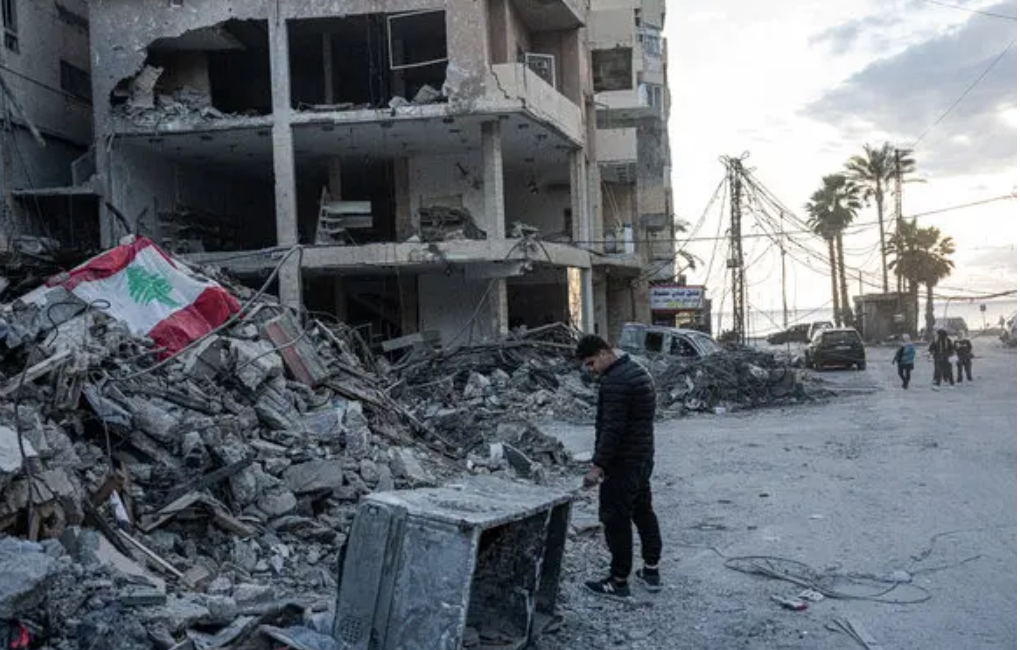
Israel continues to strike Beirut’s southern suburbs, in and around the Dahyeh district, Hezbollah’s stronghold, where a new prolonged campaign appears to be unfolding with no end in sight. The escalation is also affecting the Bekaa Valley, the Saida area, and other governorates, along with the already devastated South Lebanon, which has never truly experienced peace since the ceasefire of December 2024 and is now the target of a new Israeli ground invasion.
In less than a week, the highly predictable failure of Hezbollah’s reckless move to reignite the confrontation is already plain for all to see, and the toll is appalling: over 200 dead, 800 wounded, and 100,000 displaced persons, who are once again relying on the support of public institutions, charities, and the solidarity of ordinary citizens, in a country already grappling with a deep and prolonged economic crisis. More victims and destruction certainly lie ahead, but for what purpose?
Negative sentiments toward Hezbollah are growing further among the Lebanese population. Arrogance and ingratitude are said to have been Hezbollah’s response to the extraordinary solidarity shown by the Lebanese – beyond religious and political divides – when its constituency had to be sheltered and fed as a consequence of the organization’s unilateral involvement in the Gaza war.
By inviting Israel to resume the fight on a larger scale, Hezbollah has demonstrated blatant indifference to the will of the vast majority of the Lebanese, who understandably oppose the entanglement of their country in another catastrophic misadventure. Most probably, Hezbollah executed directives from Tehran in pursuit of the latter’s agenda, confirming its nature as a body alien to the Lebanese fabric since the very beginning of its creation.
Hezbollah’s conduct also constitutes an open challenge to Lebanese institutions. The Supreme Defense Council, summoned by President Joseph Aoun shortly before the first launch of rockets from the south, called on Hezbollah to respect Lebanon’s position of “neutrality” and accept the principle that decisions on matters of war and peace are an exclusive prerogative of the state.
Yet, Hezbollah turned a deaf ear to these demands. The mass mobilization to commemorate Ali Khamenei’s death was not simply symbolic, as the Lebanese had hoped.
Regrettably, ideological drivers rooted in its religious vision prevailed over more cautious and responsible approaches, despite the certainty of the heavy retaliation that would have severely harmed the Lebanese population, first and foremost the Shiite community itself.
After the significant weakening it suffered in the “first round” with Israel following October 7, 2023, Hezbollah managed to recover its fighting capabilities by manufacturing new rockets and drones, training combatants, and transferring military equipment to southern Lebanon, while the Army-led disarmament effort was underway with considerable difficulties and uncertainties.
For more than a year, even the repeated Israeli attacks, carried out in violation of the ceasefire and often in an indiscriminate manner, failed to prevent the rearmament. The two sides were thus firmly set on a path to a new war, just waiting for the right moment to start again.
However, since the crisis erupted, Lebanese institutions seem to have adopted a bolder posture toward Hezbollah. After the overnight bombings on March 1, President Aoun condemned the new Israeli “aggressions”, but warned Hezbollah against using Lebanon as a platform for wars that do not concern the country. Moreover, Aoun cautioned the organization that it will be held responsible for the consequences of ignoring all the appeals to preserve security and stability.
Aoun’s stance was reinforced by Prime Minister Nawaf Salam, who chaired an extraordinary meeting of the Council of Ministers during which Hezbollah’s military activities were officially declared illegal. Earlier, the Minister of Justice Adil Nassar had requested that security forces arrest those responsible for the attacks that triggered Israel’s brutal reaction.
The ban – remarkably endorsed also by the two Shiite ministers in the government and then by the highly influential Shiite Speaker of the Parliament, Nabih Berri – marked an unprecedented systemic shift of posture toward Hezbollah, which now finds itself completely isolated on a political and institutional level, reflecting the deep divide between the organization and the Lebanese society, including sectors of the Shiite community as well.
Nevertheless, Hezbollah has to date shown no sign of backing down from military action. Its Secretary General Naim Qassem, appointed shortly after the death of Hassan Nasrallah and officially designated by the Iranian regime as its representative in Lebanon, has vowed to continue the confrontation, repeating the usual narrative whereby the organization is fighting to defend the country: an argument echoed by its international “electronic army” of ideologically aligned journalists, pundits, and influencers.
However, fewer and fewer people are buying the “resistance” propaganda and narratives anymore. The decision to inflict another plague upon Lebanon and the Lebanese – already exhausted by the psychological, economic, human, and humanitarian costs of Hezbollah’s wars on behalf of external actors – has been a defining eye-opener for many of those who once sympathized with the organization or sought to justify its conduct in one way or another.
After years of self-delusion, many have finally come to realize that Hezbollah has merely provided Israel with another pretext to move forward with its plans for Lebanon. Preparations for a new ground invasion had reportedly been in progress for months, and the Vatican is said to have worked hard to avert it, both before and after Pope Leo XIV’s visit to Lebanon from November 30 to December 2, 2025.
Overall, at least throughout Benjamin Netanyahu’s era, the radical Khomeinist version of jihād has proved to be a “functional enemy” for Israel’s religiously-driven geopolitical agenda, backed by Evangelical circles in the United States, not only in the Middle East and Gulf region, but from Morocco to Azerbaijan as well.
From a religion-and-security perspective, this is a clear example of the nefarious role that eschatology can play in shaping security and military thinking and policies.
For its part, paradoxically, the deceptive “myth” of Hezbollah and its blind allegiance to the Iranian regime are doing nothing but serving the purpose of gradually drawing Lebanon into Israel’s sphere of influence, including from a cultural standpoint.
On the other hand, the Lebanese government is now following through with its decision to outlaw Hezbollah’s military wing. The internal security forces have so far detained dozens of its members and a number of “pasdaran” who had infiltrated the country from Iran to directly oversee the operations. Moreover, an arrest warrant for “sedition” is said to be forthcoming for Qassem.
However, the attempt to contain or limit Hezbollah’s range of action in the current scenario is unlikely to suffice to bring about de-escalation in the ongoing conflict, restoring peace and security in Lebanon.
The systematic razing of South Lebanon, parts of Beirut, the Bekaa Valley, and other areas is already underway, according to the “Khan Younis” model invoked by a minister in Netanyahu’s government, revealing Israel’s objectives. The evacuation warnings, which have triggered panic and apocalyptic scenes of displacement in Beirut and across the country, may further confirm Israel’s intentions.
Therefore, the swift establishment of complete territorial control over these areas by the Army, fully replacing Hezbollah’s presence, is of vital importance to prevent the looming devastation before it is too late.
Needless to say, that is much easier said than done. The presidency and the government would already have acted in this direction, as expected after the ceasefire, were it not for the risk of the Army fragmenting along sectarian lines and the intention to avoid an all-out confrontation with Hezbollah.
At the same time, the prospects for mediation appear very dim, dimmer than in the “first round”, since the conflict is now tied to the war between Iran, the United States, and Israel, where negotiating solutions under the present circumstances are highly improbable, not even for a ceasefire.
Lebanon’s survival as a nation is hanging by a thread. The Iranian President Masoud Pezeshkian apologized “to the neighboring countries that were attacked by Iran”, referring to the Gulf states. But his regime owes Lebanon far more than an apology.