Italy on Friday began to phase out its COVID-19 restrictions, ending a state of emergency public authorities declared more than two years ago that allowed it to bypass bureaucracy and swiftly impose rules via decrees.
The state of emergency was introduced on Jan. 31, 2020, but Prime Minister Mario Draghi’s government announced plans in March to return to normal after deciding not to extend it. It officially ended on Thursday.
“A new phase is beginning … This does not mean that the pandemic is over. There is no ‘off’ button that magically makes the virus disappear,” Health Minister Roberto Speranza told the newspaper la Repubblica.
Italy was the first Western country to be clobbered by the disease and it has registered 159,383 deaths, the eighth highest tally in the world, and more than 14.6 million cases.
Daily infections have risen again in Italy since the beginning of March, as they have in many other European countries, but they have stabilized in the last week, according to data from the think tank Gimbe.
The government has lifted attendance limits for outdoor and indoor sports venues, along with a requirement that anyone over the age of 50 should be vaccinated to enter their place of work.
The vaccination requirement will be kept until Dec. 31 for workers in health care.
Rules have been eased for travelers to Italy, one of the world’s top tourist destinations.
However, visitors still need to show COVID-19 health certificates and to complete a passenger locator form.
The health pass obligation for outdoor restaurants and local or regional public transport has already been removed. Masks will remain mandatory indoors until April 30.
Italy’s vaccination campaign has proved successful in reducing the burden on hospitals. Some 84 percent of Italians have received the recommended two vaccine doses, while more than 65 percent of people have received a third shot.
Italy ends COVID-19 state of emergency, curbs to be lifted gradually


Latest from Blog
Le ultime operazioni di controllo straordinario del territorio condotte dalla Polizia di Stato a Brescia segnano

Cosa significa per lei attenzione verso il prossimo? L’attenzione verso il prossimo, significa soprattutto attenzione verso

Il Marocco scrive una nuova pagina fondamentale della sua storia politica e sociale. Con un gesto
NVIDIA ha confermato la partecipazione del Marocco a due progetti africani di infrastrutture per l’intelligenza artificiale,
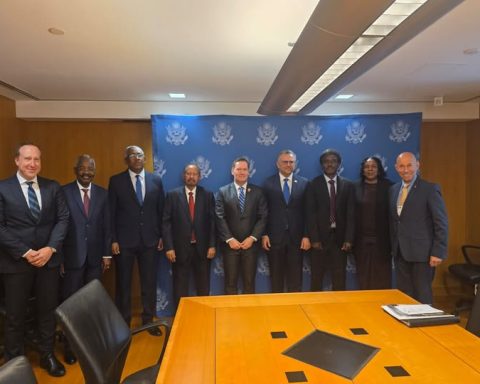
At the US State Department, meeting with Assistant Secretary of State for African Affairs Frank Garcia,

Il Marocco consolida il proprio ruolo di hub industriale strategico nel Mediterraneo e si posiziona tra
Fratelli d’Italia si conferma il primo partito nelle intenzioni di voto rilevate da EMG per Tg3

Dall’Afghanistan all’Iran la lotta passa anche per il modo di vestirsi, un convegno alla Milano Fashion
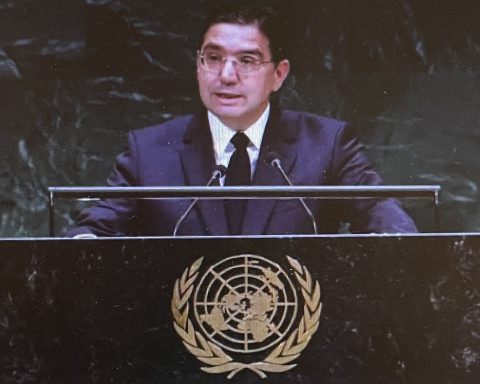
Il Processo degli Stati dell’Africa Atlantica (AASP) ha tenuto venerdì a New York la sua ottava
La città spagnola di Lleida, in Catalogna, ha approvato venerdì il divieto di “nascondersi il volto”